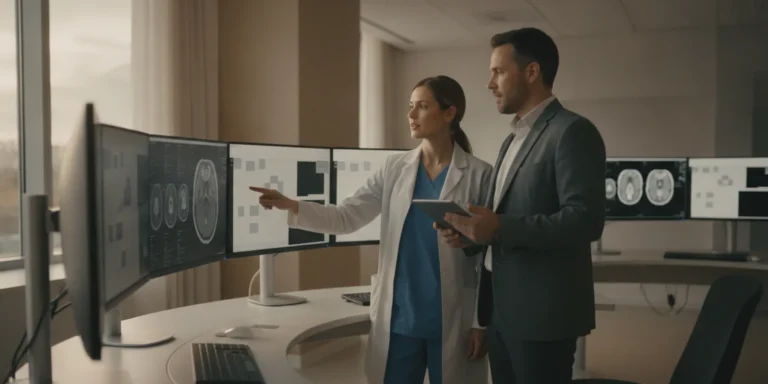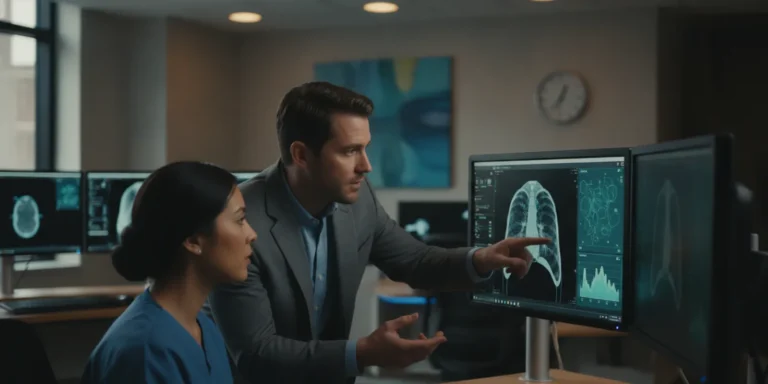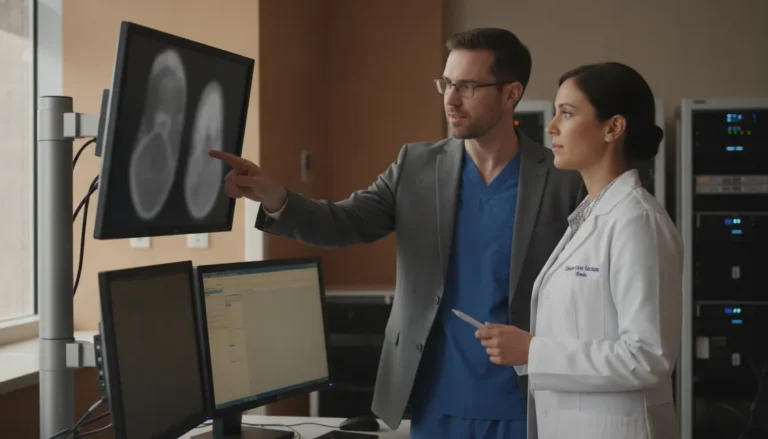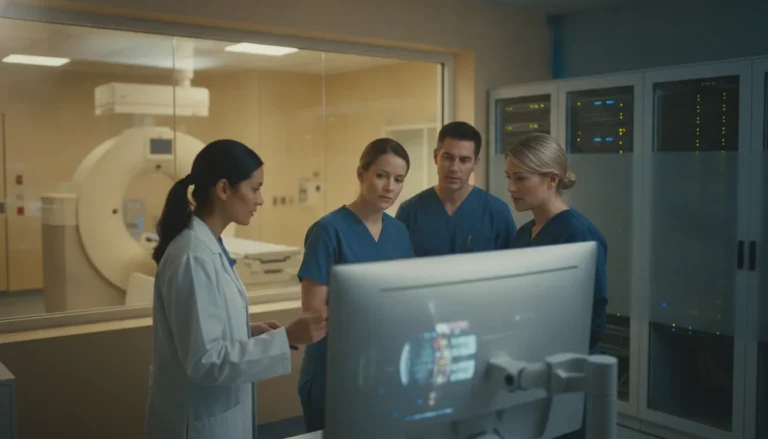


Virtual care is no longer simply about connecting providers and patients over video. Healthcare organizations today are balancing expanding digital care access with increasing pressure around cybersecurity, HIPAA compliance, patient privacy, and operational efficiency.
The challenge is significant.
Healthcare continues to experience some of the highest data breach costs of any industry, with the average healthcare breach now exceeding $10 million per incident. At the same time, hospitals and care teams are managing growing volumes of patient data, medical imaging, specialist collaboration, and remote care interactions.
Virtual care is no longer just a technology discussion.
It’s an infrastructure discussion.
Because every virtual encounter introduces questions healthcare leaders must answer:
- Is patient information protected?
- Can clinicians securely collaborate in real time?
- Does the workflow create efficiency or friction?
- Can providers access imaging and clinical data without switching systems?
- Will teams actually use the technology consistently?
Healthcare organizations increasingly recognize that video conferencing alone is not virtual care.
The Hidden Problem: Fragmented Care Creates Risk
Many virtual care environments evolved quickly.
Organizations often adopted one tool for video meetings, another for imaging access, another for messaging, and additional systems for scheduling and records.
At first, this appears manageable.
But fragmentation creates operational challenges.
Imagine a common emergency department scenario:
A stroke patient arrives at a rural hospital.
A neurologist at another location needs immediate access to:
- CT scans
- clinical images
- patient information
- real-time communication with care teams
With disconnected systems, staff may need to:
- Access the EHR
- Launch a PACS viewer
- Start a video session
- Coordinate communication separately
- Share screens or manually transfer information
Those extra steps create delays.
In emergency care, delays matter.
Even small workflow interruptions can affect treatment timelines and clinician efficiency.
And every application switch introduces another possible security risk or human error point.

Security Problems Are Often Workflow Problems
Healthcare cybersecurity conversations often focus on encryption, passwords, and technical controls.
Those matter.
But one of the largest risks can be workflow complexity.
When technology becomes difficult:
Clinicians create shortcuts.
Examples happen every day:
- using personal devices to send photos
- texting information outside approved systems
- screen sharing through unsecured channels
- manually exporting files
- relying on disconnected communication tools
These workarounds usually do not happen because teams ignore policy.
They happen because clinicians need to move quickly.
Healthcare environments demand speed.
The safest systems are often the systems people naturally adopt.
How TeleRay Is Different
TeleRay was designed specifically for healthcare environments—not adapted from business communication software.
With nearly two decades of healthcare imaging innovation, and leadership expertise spanning 150+ years of combined healthcare experience, TeleRay focuses on supporting clinical workflows where imaging, communication, and collaboration happen simultaneously.
Today TeleRay supports:
✔ 3,000+ healthcare locations
✔ 70% of leading medical centers
✔ deployments across 20+ countries
Rather than requiring clinicians to jump between disconnected systems, TeleRay helps centralize care collaboration.

Example: A Faster Specialist Consultation Workflow
Consider a patient requiring specialist review after imaging results reveal a potential cardiac concern.
Traditional workflow:
- Open imaging system
- Contact specialist
- Launch separate conferencing application
- Share screens
- Coordinate communication manually
- Document discussions elsewhere
Connected workflow through TeleRay:
- imaging available within the workflow
- specialists collaborate securely in real time
- care teams communicate inside a connected environment
- fewer transitions between systems
Less switching.
Less friction.
Less opportunity for delay.
Security Without Sacrificing Clinical Speed
Healthcare organizations often believe they must choose between security and usability.
Secure systems become complicated.
Simple systems become risky.
TeleRay approaches virtual care differently by integrating collaboration into existing clinical workflows.
Because if security slows care delivery, teams eventually find ways around it.
And workarounds create exposure.
Security should not interrupt care.
It should support it.

The Future of Virtual Care Depends on Trust
Patients increasingly expect digital experiences.
Providers increasingly collaborate remotely.
Healthcare organizations increasingly operate across distributed systems and locations.
As virtual care expands, trust becomes foundational.
That trust depends on:
- privacy safeguards
- compliance readiness
- secure communication
- workflow efficiency
- integrated care experiences
TeleRay helps healthcare organizations move beyond simple video encounters toward secure, connected virtual care experiences designed for healthcare realities.
Because virtual care should do more than connect people.
It should help improve the delivery of care itself.