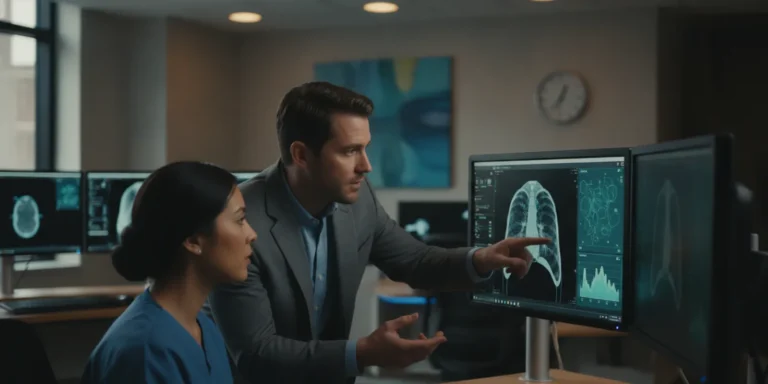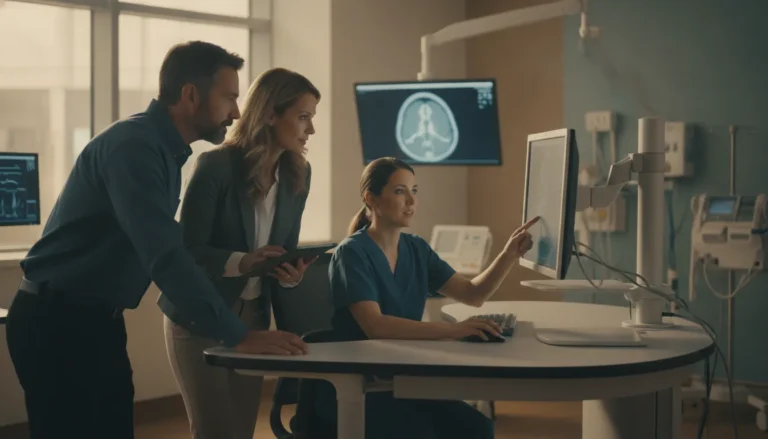
Patient falls cost United States hospitals 50 billion dollars each year. Paying bedside staff to watch single high-risk patients around the clock is no longer a sustainable option. Healthcare leaders need a safer, more cost-effective way to protect vulnerable patients.
Telesitting is a digital patient-monitoring model that uses video technology to help technicians watch multiple high-risk patients from a central station. This remote observation system replaces costly one-to-one bedside sitters to protect patients who are at risk of falling or pulling out medical lines. By using mobile camera carts, a single trained observer can safely watch up to 16 patients at the same time. The observer can alert floor nurses immediately if a patient attempts to stand up or pull at their medical equipment. According to a clinical review on PubMed, transitioning to virtual observation reliably reduces inpatient fall rates while lowering hospital labor costs. This unified approach allows clinical teams to scale their patient safety efforts without adding extra bedside staff.
Understanding how this remote monitoring technology works is the first step toward upgrading your clinical workflows. To help you evaluate this virtual safety model, we will start by looking at the details of What Is Telesitting in Hospitals? Here is how the program works.
What Is Telesitting in Hospitals?
Hospitals face a constant challenge in keeping weak patients safe from harm during their stay. Traditional one-to-one in-person sitters are costly and hard to find in busy care units. Many clinical teams now turn to telesitting as a safer, more useful option. This method uses live video feeds so a remote worker can watch several rooms at once.
Virtual patient observation
At its core, this service links a patient to a trained monitor worker. The system uses a camera in the room to send live video to a central desk. The remote worker can talk to the patient using a two-way speaker. If a patient tries to leave the bed, the worker can speak to them or alert local staff.
This approach works much better than placing a physical sitter next to every high-risk bed. A single observer can monitor up to sixteen rooms at once. The worker watches several video feeds on a set of screens. They can spot risky movements early and call for help before a fall happens.
Hospitals can set up these video systems in two ways. They can use mobile carts with cameras and screens that move from room to room. Other sites install fixed cameras on the walls of patient rooms for permanent use. Both setups allow staff to start watching a patient within minutes.
Inpatient risk mitigation
Using virtual sitters helps clinical teams manage patient risk in several ways. This method is helpful for patients with delirium or dementia who may get confused. It also lets staff monitor patients who are prone to pulling at vital medical lines or tubes. These actions are a major cause of harm in hospital rooms.
A major study on continuous video monitoring showed clear clinical and financial benefits across hospital units. The research looked at twelve papers on virtual observation. Eight of these papers showed a clear drop in patient falls. At the same time, all twelve papers reported lower overall costs when hospitals made the change to virtual sitters.
Hospital safety teams use virtual monitoring to watch for several major risks:
- Sudden patient falls from beds or chairs.
- Harm from pulling out IV lines or breathing tubes.
- Delirium and confusion that lead to patient wandering.
Contrast with remote monitoring
It is vital to tell telesitting apart from other virtual care options. Many people confuse this tool with telehealth remote monitoring, which is also called remote patient monitoring. While both tools use technology to help, they serve very different clinical roles. Remote patient monitoring tracks health data from home using smart tools.
These smart tools collect metrics like heart rate, blood pressure, and blood sugar. Doctors use this data to manage long-term illness over many months. In contrast, telesitting is a continuous live tool used inside the hospital. Its main goal is to keep high-risk patients safe by spotting sudden physical moves in real time.
The target users for each tool also differ. Remote data tools help chronic care patients who live at home but need daily checks. In contrast, telesitting is strictly for patients in the hospital who need help right away. It serves as a short-term shield to prevent sudden accidents during a hospital stay.
How Telesitting Reduces Hospital Costs
Hospital finance leaders face a constant struggle to balance patient safety and labor costs. Old models rely on in-person staff to watch patients at risk of falls or self-harm. This one-to-one care model is expensive and strains limited nursing resources. Many hospitals now use telehealth remote monitoring and virtual sitting to manage these safety needs.
The cost of one-to-one patient care
Hiring one-to-one staff for patient safety is a major expense. For example, a local hospital that needs fourteen sitters each day can spend about $425,000 every year on manual observation. These figures come from a report by the Petrie-Flom Center at Harvard. When staffing needs spike, hospitals pay high overtime rates to fill open shifts.
Patient falls also create major extra costs. When a patient falls and gets hurt, the hospital must pay for that extra care. Most health insurance plans do not cover injuries that happen during a hospital stay. This means a single fall can wipe out the profit of several successful treatments.
This manual approach also drains the clinical team. Nursing aides must sit in rooms instead of helping with active patient care. This shift increases floor workload, leading to high employee burnout and high turnover. Replacing these workers adds more unexpected costs to the hospital budget.
Financial returns of virtual observation
Moving to telesitting systems brings fast cost savings. In a review of twelve published studies on video monitoring, every single study showed a decrease in overall hospital costs. This shift from manual care to remote tech directly drives down the hourly labor spend. Hospitals can shift their in-person staff to critical medical tasks.
These savings are not minor. By replacing a fraction of one-to-one shifts, hospitals can recover their first hardware purchase within months. Lowering the direct cost of patient watch programs lets clinical managers use their budgets for better patient services. This solid return on investment makes remote video tools a smart choice for modern clinical sites.
Scaling care with virtual staff
The main financial driver of virtual sitting is its ability to scale. Instead of watching just one patient, a single virtual technician can monitor twelve to fifty-seven patients at the same time. This major boost in output means a small team of observers can protect many rooms across several floors.
This model helps clinical staff focus on care. When the remote observer spots a risk, they tell the nurses right away. This quick alert prevents falls before they happen. By using remote tools, hospitals improve safety and lower labor expenses.
Telesitting vs. In-Person Sitters: Safety, Cost, and Staffing
Hospitals face safety challenges with patient falls. In-person bedside sitters give a common safety net. But this one-to-one approach is costly and drains staff. Centralized observation platforms are now a clear choice to support clinical teams.
Staffing ratios and patient coverage
Standard bedside sitting assigns one staff member to one patient. This means the staffing ratio is always one-to-one. In contrast, telehealth remote monitoring and telesitting systems allow a single observer to track many rooms at once. A single technician can monitor twelve to fifty-seven patients from one central workstation.
This shift in scale changes the way clinical teams work. They no longer have to sit in a single room for hours. Instead, nurses can focus on direct clinical care where they are needed most. Centralized observation works as a helpful safety net, but bedside clinical teams must still make final decisions.
Using virtual observation helps ease staffing shortages. Hospitals do not need to pull valuable bedside nurses from their main roles to sit with patients. Instead, monitoring staff handle these duties. This keeps trained nurses on the floor where they can give direct medical care.
Labor costs and hospital resource allocation
Bedside sitter programs are a major labor cost for modern hospital systems. Paying for multiple bedside observers strains thin nursing budgets. Centralized systems lower overall labor expenses. When a single technician can monitor dozens of beds from one central room, the cost per patient drops fast.
Clinical evidence shows that virtual systems lower overall hospital costs. A PubMed study examined twelve separate papers on continuous video monitoring. All twelve papers reported a clear drop in total costs when hospitals transitioned to virtual sitters. Choosing virtual care helps medical centers save funds while maintaining strict security and compliance standards.
Alert response times and patient fall rates
Patient safety remains the most critical metric for nursing leaders. Bedside sitters can act instantly because they are physically in the room. But their physical presence is limited to just one high-risk patient at a time. Centralized telesitting platforms watch many rooms at once and alert clinical teams if a patient tries to stand.
Published data shows these central alerts are fast and highly effective. On average, virtual observers respond to patient alerts within 15.1 seconds. The clinical proof for lower hospital fall rates is clear. The PubMed review of twelve separate studies showed that eight papers achieved a clear drop in patient falls.
| Metric. | In-Person Sitters. | Telesitting. |
|---|---|---|
| Patient coverage. | One patient per sitter. | Up to 12 to 57 patients per tech. |
| Staff cost. | High hourly wage per patient. | Low shared cost per patient. |
| Response time. | Immediate bedside presence. | Average 15.1 seconds after alert. |
| Fall prevention. | Lacks clinical study data. | Reduction shown in 8 of 12 studies. |
AI Patient Monitoring and Fall Detection: What It Prevents
Hospitals face a major test in keeping patients safe in their rooms. Traditional telesitting helps by placing a virtual observer on a screen to watch at-risk patients. Now, adding artificial intelligence (AI) to these systems makes them much stronger. AI patient monitoring works with staff to spot risky movements before they lead to an accident.
The financial toll of inpatient falls
Patient falls are a common and costly problem in healthcare. In fact, patient falls cost U.S. hospitals about $50 billion every year. This estimate comes from a report by the Harvard Law Petrie-Flom Center. When a patient falls, it can lead to severe injuries, longer stays, and higher costs for the facility.
Traditional virtual sitting helps, but human observers can get tired or distracted. AI tools solve this by looking at video feeds in real time. The software can track when a patient tries to stand up or pull out an IV line. It then alerts the virtual sitter right away to prevent harm.
Continuous monitoring in acute and specialized care
Hospitals are setting up these systems where safety is most at risk. Many acute care facilities now use continuous video monitoring to watch their patients. A study in the National Institutes of Health PMC archive shows how these programs help in long-term acute care. They help staff track patients across different rooms at the same time.
In specialized hospital units, continuous monitoring protects patients who face unique risks. These settings often include:
- Geriatric units where patients might wander or fall because of confusion.
- Intensive care units where patients might pull at their breathing tubes or IV lines.
- Rehab centers where patients are learning to walk and might try to stand without help.
This type of inpatient telesitting is not like standard telehealth remote monitoring. Remote monitoring tracks medical data like heart rate or blood pressure from a patient’s home. In contrast, virtual observation tools focus on live video in active hospital units. These units include specialized wards where patients may be confused or prone to wandering.
Staff support versus clinical judgment
These digital tools are designed to support hospital teams, not to take their place. A virtual monitor can send an alert, but it does not replace clinical judgment or hands-on nursing. Instead, it serves as an extra set of eyes to help busy teams manage their work. This setup keeps patients safe while letting bedside staff focus on direct medical care.
By using these tools, hospitals can make better use of their staff. Nurses do not have to stand watch in a single room for hours. Instead, they can rely on the virtual sitter to monitor the patient and send alerts when help is needed. This team approach improves safety and keeps staff happy.
How to Implement a Telesitting Program
Program planning and risk assessment
Before you buy hardware, you must find out which patients need help. Scan your wards to see who has a high risk of falls or pulling out treatment lines. You need to know your daily need for close patient watch. This step helps you size your system and plan your staff needs. A good launch starts with clear data on your patient group. You should also check which clinical units see the most risk, as this lets you focus your tech where it is needed most.
Technology alone cannot prevent patient falls. You must combine the right tools with proper staff training and clear rules for how to talk to patients. A study shows that a successful telesitting program must blend technology, staff training, and patient-interaction protocols. When your team knows how to use the tools, patient safety goes up and costs go down. Proper training ensures that your staff can act fast in a crisis, which keeps patients safe without adding stress to floor nurses.
The step-by-step launch process
To launch your program, follow a clear path. Each step builds on the last to keep patients safe.
- Assess clinical demand: Find which units have the most falls and need the most help. This lets you put your screens and cameras where they do the most good.
- Select the hardware: Choose mobile carts or fixed wall cameras that feed into a central watch hub. The right tools must fit your room layout and staff needs.
- Link with clinical software: Connect your patient watch tools with your existing EMR integrations to keep charts up to date. This cuts down on double entry and saves time for your nurses.
- Train your care teams: Teach floor nurses and watch techs how to use the tools and talk with patients. Everyone must know their role and how to work as one team.
- Set up alert paths: Define clear workflows so watch techs can call floor staff fast when a patient is in danger. A fast response is key to stopping a fall before it happens.
- Track program metrics: Watch your fall rates, response times, and labor costs to prove the value of your program. Use these facts to show how much money you save each year.
Tracking results and next steps
After launch, you must track your results. Use your data to make the system better over time. Look at how fast your staff responds to alerts. Compare your new fall rates with your old rates. Make sure you do not confuse this inpatient system with telehealth remote monitoring, which tracks patients at home. Clear data helps you show the return on your investment. It also shows you where you can add more watch screens to help more patients.
HIPAA and Security for Virtual Patient Monitoring
Security protocols for virtual observation
Studies indexed in PubMed show that virtual observation cuts patient falls. But streaming live video inside a hospital raises major privacy concerns. Protecting patient privacy is a top goal for any telesitting setup. Healthcare systems must use tools that keep all data safe and comply with federal laws.
These safety rules apply to many parts of the hospital. Virtual patient monitoring can be used in specialized inpatient units where patient safety is a top concern. This wide use is why solid compliance frameworks are so important for telehealth networks.
To keep patient trust, platforms must meet strict security and compliance standards. This protection is vital when teams monitor patients who are prone to pulling out lines or falling. Safe software helps staff manage these risks without leaking patient data. But virtual monitoring supports hospital staff and never replaces clinical judgment.
HIPAA compliance and FDA requirements
A robust patient observation platform must follow all rules set by the federal government. The software needs to support HIPAA compliance across all clinical workflows. It must also meet SOC 2 Type II standards to prove its security controls are solid over time. These audits show that the platform protects personal health details from theft or leaks.
Also, clinical teams need to view medical images with full trust in their tools. Teleray holds FDA 510(k) clearance for diagnostic viewing, which means doctors can use the viewer for primary findings. It makes sure that the visual data used in patient care is both clear and precise. IT directors can trust this clearance for high-quality clinical care.
Encryption and financial safeguards
Data moving across a hospital network must stay safe from outside threats. Teleray uses proprietary peer-to-peer encryption that exceeds standard AES-256 protocols. This advanced encryption shields active video feeds from hacking and makes sure no outside parties can access them. Security like this is needed to protect patient dignity during telesitting sessions.
Even with strong encryption, modern health systems must plan for cyber risks. Teleray offers an industry-first $2,000,000 breach insurance policy to give clients full peace of mind. This policy helps cover costs if a security event occurs and shows a deep commitment to safety. No other competitor in this space gives this level of backup.
Why a Unified Platform Matters for Patient Monitoring
Many hospitals use distinct tools for virtual visits, diagnostic viewing, and telesitting. This split design creates data silos and slows down workflows, but a unified tech platform solves these problems. We believe our platform is the only solution that combines virtual care, medical imaging (DICOM/PACS), FDA-cleared diagnostic viewing, and AI-powered patient monitoring. Using one system helps healthcare teams simplify daily work and share data safely across units.
Virtual care and clinical imaging together
In standard setups, staff must log into other programs to view scans and check on patients, which raises security risks. Merging these tasks onto our platform allows clinical teams to hold virtual care consultations while viewing live medical scans. We also offer live modality streaming to show real-time feeds from CT, MRI, and ultrasound devices during procedures. No other brand in the market offers this level of live image access.
Combining virtual care with live diagnostics gives clinical teams several main benefits:
- Staff can monitor patient safety and view scans on a single screen.
- Doctors can consult with imaging experts fast without switching apps.
- Teams can reduce system delays and improve patient safety.
Rapid integrations for clinical workflows
IT leaders often worry that new systems will disrupt workflows, but a unified platform bypasses these hurdles. Our system is built to link directly with existing hospital software to ensure fast and secure data sharing. We provide rapid EMR integrations with a standard timeline of just two weeks. This fast setup works across more than 250 EMR systems, letting hospitals connect telesitting tools and patient data streams to their core charts without delay.
Proven scale in major medical centers
When choosing a patient observation system, healthcare groups need a solution that is already proven in complex clinical settings. Deploying a single platform across units is far simpler than running siloed tools from several vendors. Academic reviews on PubMed show that virtual sitting programs decrease overall costs for hospitals moving from standard one-to-one care.
Today, our unified platform has deployments in 70 percent of the top 50 medical centers. Merging observation into one system helps teams save staff time and keep patients safe. This wide adoption shows that large hospital systems trust our tech to support safe, daily care.
Fragmented setups often force IT teams to manage many software licenses, complex contracts, and constant update cycles. This split can lead to security gaps and high upkeep costs. Choosing a unified platform avoids these problems by providing a single point of support and a steady user design. Hospital leaders can easily scale their patient safety programs, knowing the underlying system is strong and secure.
Frequently Asked Questions
How many patients can a single telesitting technician monitor?
A single remote observer can monitor 12 to 16 patients at the same time. This is much better than old one-on-one care. Research from the NIH shows this system helps hospitals lower labor costs while keeping patient safety high. This setup also lets nurse teams focus on hands-on care.
Does virtual patient monitoring actually reduce inpatient falls?
Yes, clinical data shows that virtual patient monitoring reduces inpatient falls. In a review of twelve studies on the National Library of Medicine, eight studies showed a clear drop in falls. The remaining studies showed no statistical difference, but all twelve showed that virtual tools lower overall costs.
What security standards must telesitting software meet?
Telesitting software must comply with HIPAA rules and hold SOC 2 Type II security credentials. To keep patient data safe, platforms like TeleRay use peer-to-peer encryption that exceeds standard AES-256 levels. Some systems also include custom breach insurance to protect the hospital if a security issue occurs.
How long does it take to integrate telesitting with a hospital EMR?
Timelines vary, but modern platforms can connect in about two weeks. Platforms built on a unified system can link with more than 250 EMR systems very quickly. You can schedule a demo with an expert to see how these virtual tools integrate with your current clinical workflow.
Ready to protect your care team and secure your hospital wards?
Without a unified system, your busy clinical team will continue to face high burnout while patient falls and response times rise on your wards. Our team can install our complete patient safety platform in just two weeks, so you do not have to wait months for real change. With this quick setup, you can protect your frontline nurses, lower overall site costs, and keep your patients safe in every room of your clinic.
Are you ready to protect your patient wards, lower staff burnout, and support your care team? Please Schedule a Demo today to see how easy it is to set up our unified virtual care and patient monitoring platform.