Hospital teams rarely experience virtual care and medical imaging as separate activities. A patient encounter may begin with a remote nurse or specialist, move to an imaging procedure, and end with images, findings, and follow-up tasks that must reach the right people and systems. When those steps live in disconnected tools, context can be lost between departments.
In a hospital, telemedicine uses telecommunications to support medical, diagnostic, and treatment-related services across distance, including diagnostic testing and access to specialists in another location. The workflow may combine two-way video, telenursing, specialist collaboration, live modality viewing, or store-and-forward image review, depending on the clinical need. The FCC describes telemedicine in this broader diagnostic and specialist-access context.
The practical question is not simply whether a hospital can conduct a video visit. It is how remote participants, imaging devices, PACS, and the EMR work together while preserving security, access control, and clinical responsibility. That starts with a clear definition of the hospital setting and its operational requirements.
What Is Telemedicine in a Hospital Setting?
Telemedicine is the use of telecommunications technology to support medical, diagnostic, and treatment-related services across distance. The Federal Communications Commission describes it as a way to conduct diagnostic tests, monitor a patient’s progress, and connect patients with specialists who are not in the same location. The National Library of Medicine identifies three defining elements: information or telecommunications technology, distance between participants, and a health or medical purpose. Together, these elements distinguish telemedicine from a general video call or a consumer communication tool.
Telemedicine connects people, information, and clinical expertise
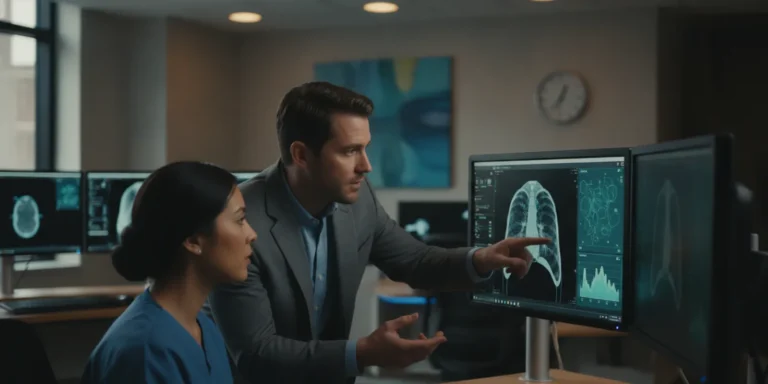
In a hospital, the remote interaction may involve a patient and clinician, but it can also involve nurses, radiologists, imaging technologists, intensivists, surgeons, or other specialists. A hospital team may use two-way video for virtual rounding or telenursing, review a study with a remote consultant, or coordinate care when the relevant expertise is located at another facility. The objective is not simply to place a conversation online. It is to make the right clinical information available to the appropriate participants within a defined workflow.
This broader scope is reflected in the FCC’s explanation of telehealth and telemedicine, which includes diagnostic services and specialist access alongside interactive remote care. The technology supports communication and information exchange; licensed professionals remain responsible for clinical judgment and care decisions.
Hospital telemedicine includes diagnostic collaboration
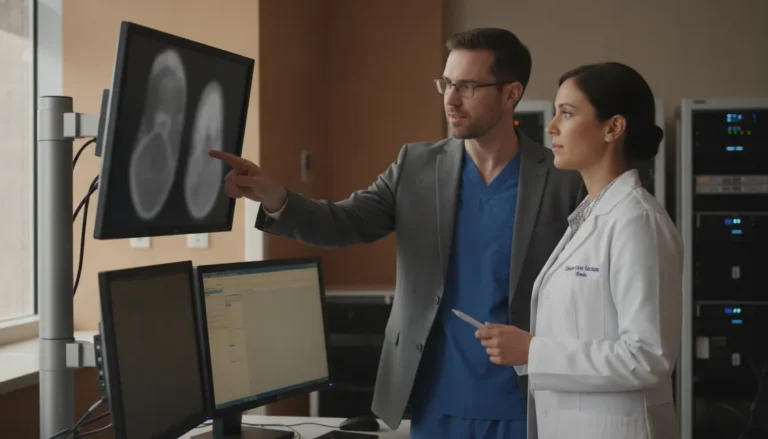
Diagnostic collaboration may be synchronous or asynchronous. In a live workflow, a specialist can communicate with staff at the bedside while observing the patient, room, or imaging procedure remotely. This can be useful when the remote participant needs context beyond a static image, such as how an examination is being performed or what the local team is seeing. In a store-and-forward workflow, digital images and related information are saved and transmitted to a consultant for interpretation at a later time. The National Library of Medicine describes store-and-forward technology as a way to send digital images to consultants while allowing scheduling flexibility on both ends.
That distinction matters for hospital planning. A telemedicine platform may need to support real-time video, secure image exchange, clinical documentation, and connections to systems such as PACS or an EMR. A consumer-only video visit generally addresses the conversation layer, but may not carry the imaging, patient-context, access-control, and reporting requirements of a hospital environment.
How hospital telemedicine differs from a consumer video visit
A consumer video visit is often a direct encounter between one patient and one provider. Hospital telemedicine can be a coordinated service involving multiple roles, devices, locations, and information systems. It may include specialist collaboration, remote observation, diagnostic image review, virtual rounding, or support for a patient already receiving care in a hospital or imaging setting.
For that reason, organizations should define telemedicine by the workflow it enables, not by the presence of a camera. The relevant questions include which participants need access, what clinical information must travel with the encounter, whether imaging must be shared live or later, and how the resulting documentation returns to the hospital record. This operational definition keeps telemedicine focused on connected medical services rather than generic remote communication.
How Telemedicine Connects Virtual Care and Medical Imaging
In a hospital setting, telemedicine is more than a video call between a patient and a clinician. It can connect the patient encounter, remote observation, specialist collaboration, image acquisition, and documentation across the same operational workflow. That connection matters when a care team needs to support a patient in one room. Consult a specialist in another location, or give an imaging expert visibility into an exam as it occurs.
Start with the patient and care team
The workflow begins with the people involved in care. TeleRay Visit supports two-way audio and video, multi-room patient monitoring, telenursing, telesitting, tele-ICU, virtual rounding, specialist collaboration, and remote admissions or discharges. These capabilities allow a remote team member to participate in the appropriate part of the encounter without treating remote care as a generic consumer video visit. A nurse may support a patient from a centralized location. A virtual observer may monitor assigned rooms. A specialist may join a discussion with the bedside team while local clinicians remain responsible for in-person assessment and clinical decisions.
This model keeps the interaction tied to the hospital’s workflow. Patient context can be established through the virtual encounter. Then shared with the professionals who need to review an image, observe a procedure, or coordinate the next operational step. Organizations can learn more about virtual care and telenursing as part of this connected approach.
Bring the imaging specialist into the room
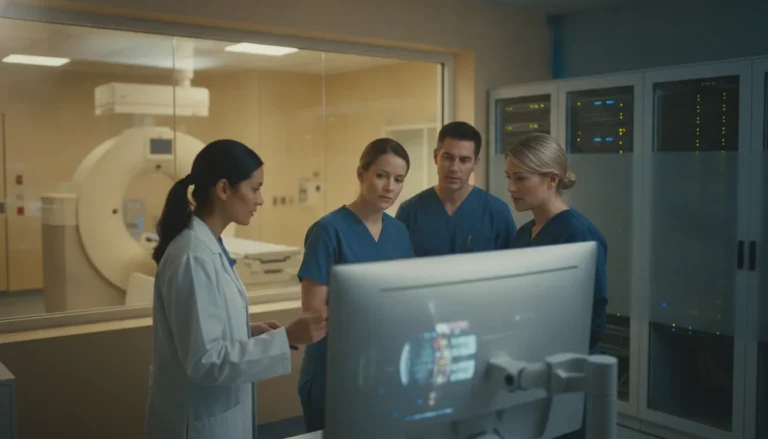
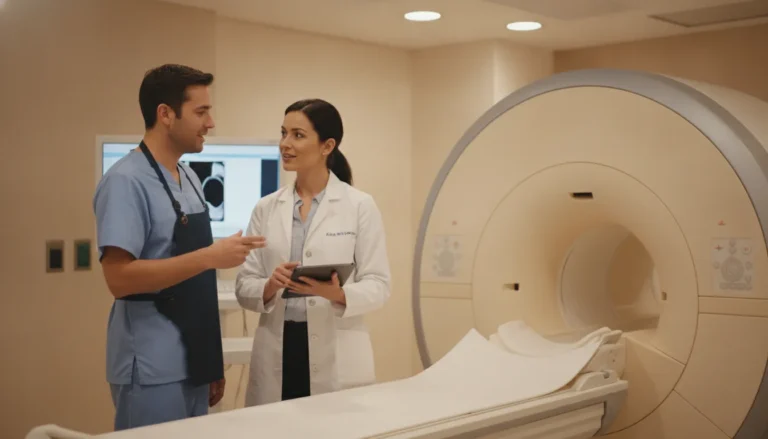
Medical imaging adds another layer to the interaction. TeleRay Live can stream imaging procedures in real time with video conferencing, room and patient views, probe-position visibility, and post-exam DICOM transfer. In practical terms, a remote specialist can see the imaging context and communicate with the local team while an exam is underway. This is distinct from simply sending a completed file for later review. It supports collaboration around the procedure itself, including visibility into how an ultrasound probe is positioned or what is happening in the room.
The capability applies across ultrasound, fluoroscopy, MRI, CT, and other modalities, according to the customer’s published platform information. It can also support a store-and-forward pathway when real-time participation is not required. In that model, digital images and related information can be transmitted to a consultant for later interpretation, a use case described by the National Center for Biotechnology Information in its telemedicine overview.
Keep images connected to the downstream record
A unified workflow must continue after the conversation or exam. TeleRay supports post-exam DICOM transfer and capabilities including DICOM 3.0, routing, Query/Retrieve, Modality Worklist, study anonymization, cloud PACS, multi-site study sharing, and prior-study comparison. Those functions help organizations connect live collaboration with the systems used for imaging management and review, rather than leaving a video session and an imaging study in separate silos. The result is a telemedicine workflow designed around communication, imaging, and documentation together, while preserving the role of qualified clinicians in interpreting studies and making care decisions.
A Practical Telemedicine Workflow for Imaging-Enabled Care
Imaging-enabled telemedicine works best when the encounter is designed as a connected operational pathway, not as a video call followed by separate technical handoffs. The care team should define what information travels with the patient, which specialists need access, how images are captured or shared, and where the final record is documented. The following six-step workflow provides a practical framework while leaving clinical decisions with the appropriately credentialed professionals.
- Intake and context: Begin by confirming the patient identity, encounter purpose, location, relevant history, and the clinical participants who need to join. Demographic information can be imported into the workflow, while the originating team identifies whether the encounter involves telenursing, telesitting, tele-ICU support, virtual rounding, specialist collaboration, or an imaging procedure. This context helps staff select the appropriate device, room, modality, and access permissions before the remote participant connects. TeleRay Visit supports two-way audio and video, multi-room patient monitoring, telenursing, telesitting, tele-ICU, virtual rounding, specialist collaboration, and remote admissions or discharges. Learn more about virtual care and telenursing.
- Connection and readiness: Establish the secure session between the patient or local care team and the remote clinician. Confirm audio, video, room visibility, and the ability to communicate without disrupting local care. For organizations using multiple facilities, the same stage should account for site-specific access rules and the specialist’s role. A telemedicine platform should support the actual hospital environment, including bedside interactions and clinical collaboration, rather than assuming every participant is joining from a standard office.
- Imaging and acquisition: When imaging is part of the encounter, connect the relevant modality and define whether the specialist is reviewing an existing study or participating during acquisition. TeleRay Live can stream procedures in real time with video conferencing, room and patient views, probe-position visibility, and post-exam DICOM transfer. It supports ultrasound, fluoroscopy, MRI, CT, and other modalities. The platform also supports DICOM 3.0, DICOM routing, Query/Retrieve, and Modality Worklist capabilities, which help make the study part of a governed imaging process instead of an isolated video feed. Explore live medical imaging.
- Collaboration and interpretation: Give authorized participants the information required for the consultation, while keeping responsibilities clear. The remote specialist may observe the procedure, discuss views with the local team, compare prior studies, or contribute to a consultation according to the organization’s clinical protocols. Multi-site study sharing and prior-study comparison can support review across locations. Real-time collaboration does not replace clinical judgment, local policies, or the qualifications required for interpretation.
- Documentation and record delivery: Complete the record using the hospital’s established documentation and reporting process. Post-exam DICOM transfer can move imaging data into the next stage of review, while automated study routing and provider worklists can help direct work to the appropriate team. TeleRay reports integration with more than 250 EMR and EHR systems and supports HL7 v2.x, FHIR R4, SMART on FHIR, REST/SOAP, database, and file-based interfaces. Workflows can include result delivery to the EMR, demographic import, billing-code generation, and quality-metric tracking. Review EMR integration options.
- Follow-up and governance: Close the encounter by confirming the responsible team, outstanding questions, next review point, and where the final documentation resides. Follow-up may involve another virtual visit, a subsequent imaging review, or coordination with an onsite service. Access should be limited to authorized users through role-based permissions and multifactor authentication, with security controls applied to data in transit and at rest. The organization should also review exceptions, incomplete studies, connectivity issues, and documentation gaps as part of ongoing governance.
This sequence gives administrators, imaging leaders, and clinical teams a shared operating model. It can be adapted to the hospital’s existing EMR, PACS, modalities, staffing model, and approval processes without imposing a fixed implementation timeline or assuming that every encounter follows the same clinical path.
What Should Healthcare Organizations Evaluate in a Telemedicine Platform?
A telemedicine platform should be evaluated as part of the hospital’s operating environment, not as an isolated video tool. The right questions concern how information moves between people, devices, imaging systems, and the EMR, and how clearly the organization can govern that movement. A platform may support a virtual encounter, but still create manual work if it cannot carry patient context, imaging studies, documentation, and results through the existing workflow.
Begin with the use cases that matter to the organization. These may include specialist collaboration, virtual rounding, telenursing, telesitting, tele-ICU operations, remote admissions, or imaging guidance. Then evaluate whether the platform supports those workflows across departments and sites without forcing clinicians to maintain disconnected tools. Teleray combines virtual care, medical imaging, and AI monitoring in one platform, which provides a basis for assessing these capabilities together rather than purchasing each function independently.
Interoperability, imaging, and device access
Interoperability should be tested at the level of a real encounter. Ask whether the system can receive the demographic context needed to identify the patient. Connect the appropriate provider, route the relevant study, and return documentation or results to the EMR. Teleray reports integration with more than 250 EMR and EHR systems and supports HL7 v2.x, FHIR R4, SMART on FHIR, REST/SOAP, database, and file-based interfaces. The meaningful evaluation point is not the number of interfaces alone, but whether the available method fits the organization’s architecture and governance requirements.
Imaging deserves the same scrutiny. A buyer should confirm support for DICOM 3.0, DICOM routing, Query/Retrieve, Modality Worklist, study anonymization, cloud PACS, multi-site sharing, and prior-study comparison. These functions help determine whether a telemedicine workflow can include the image itself, rather than merely a conversation about an image. Teleray’s medical image collaboration capabilities are relevant when evaluating how acquisition, review, sharing, and storage fit together.
Also test device and browser access in the locations where care occurs. Evaluate supported cameras, imaging equipment, microphones, displays, carts, and network conditions. For real-time use, ask how the platform behaves when bandwidth changes and whether it can preserve usable communication without requiring every site to have identical infrastructure. Teleray identifies adaptive bitrate streaming and bandwidth optimization as part of its real-time architecture. That is a technical capability to validate in the organization’s own environment, not a substitute for network testing.
Security, governance, and scale
Security evaluation should cover controls, accountability, and operating practice. Confirm how the platform handles authentication, role assignment, access reviews, audit records, data storage, transmission, retention, and incident response. Teleray’s documented framework includes HIPAA safeguards, SOC 2 Type II, AES-256 encryption at rest. TLS 1.3 in transit, multifactor authentication, role-based access, dedicated customer Azure storage silos, and infrastructure monitoring. These controls support due diligence, but compliance statements alone do not establish that a deployment is governed correctly. The organization still needs defined ownership, training, escalation paths, and review procedures.
Finally, assess scalability in operational terms. Can the platform support additional departments, facilities, modalities, providers, and concurrent workflows while preserving consistent access policies and data routing? Ask how changes are tested, how interfaces are monitored, and how clinical and IT teams will measure adoption and exceptions. A structured evaluation keeps the decision focused on workflow fit, security, governance, and the organization’s longer-term operating model.
| Capability | Evaluation question |
|---|---|
| Interoperability | Which HL7, FHIR, API, database, or file-based interfaces can connect the platform to the organization’s EMR and identity systems? |
| DICOM and PACS | Can the platform route, retrieve, anonymize, share, and compare studies across sites while supporting the organization’s PACS workflow? |
| EMR workflow | Can it import demographics, support provider worklists, route studies, and deliver results or documentation back to the EMR? |
| Device access | Will approved cameras, modalities, displays, browsers, and network connections work reliably in each intended care setting? |
| Security | How are users authenticated, authorized, monitored, and restricted, and how are data protected at rest and in transit? |
| Governance | Who owns access reviews, workflow changes, training, incident response, retention, and clinical policy decisions? |
| Scalability | Can the organization add sites, specialties, devices, and users without creating inconsistent controls or disconnected workflows? |
How EMR Integration Supports Telemedicine Workflows
Telemedicine becomes more useful to a hospital when the virtual encounter connects to the information systems that clinicians already use. EMR integration can carry patient context into the workflow, coordinate imaging and provider tasks, and return reports or other results to the appropriate record. That reduces the need for staff to move between disconnected applications while preserving the hospital’s established documentation and access processes.
Start with the right patient and clinical context
A connected workflow can begin with demographic import, giving the care team relevant patient information before a virtual consultation or imaging activity starts. This context helps align the encounter, study, and destination record. It also supports workflows in which a specialist collaborates with a local team, reviews a study. Or participates in a telemedicine session without requiring every participant to manually recreate information in a separate system.
For imaging-enabled care, integration can extend beyond demographics. Automated study routing and provider worklists can direct information to the right service, location, or clinician based on the organization’s configured workflow. The technology does not replace clinical judgment or governance. Instead, it provides structured pathways for people to review, interpret, and document work.
Support multiple interoperability approaches
Healthcare organizations rarely operate identical technology stacks. Interface requirements may vary by EMR, department, site, legacy system, and the type of data being exchanged. TeleRay reports integration with more than 250 EMR and EHR systems, including Epic, Cerner, Meditech, and Athena. Its supported approaches include HL7 v2.x, FHIR R4, SMART on FHIR, REST/SOAP, database, and file-based interfaces. EMR integration therefore needs to be evaluated against the specific systems and information flows in scope, rather than treated as a single universal connection.
HL7 v2.x may support established event and message workflows, while FHIR R4 and SMART on FHIR can support newer resource-based and application-oriented patterns where the environment is configured for them. REST/SOAP, database, and file-based methods may also be relevant when a hospital’s existing architecture depends on those interfaces. The right combination depends on data ownership, security requirements, workflow design, and the capabilities of each participating system.
Return results to the operational workflow
Integration should be assessed from both directions. It is not enough to bring patient information into a platform if reports and results remain isolated from the EMR. A complete design can include result delivery to the EMR, provider worklists, billing-code generation, and quality-metric tracking. These functions help connect the virtual or imaging encounter to downstream documentation and administrative processes.
Implementation depends on workflow complexity, system configuration, interface standards, and the number of departments or locations involved. Organizations should map the desired journey from demographic context through study routing, provider review, reporting, and result delivery before selecting an integration approach. That planning produces a more realistic implementation scope than a fixed timeline promise and gives clinical, IT, and operational stakeholders a shared basis for validation.
Security and Governance Considerations for Telemedicine
Security in a hospital telemedicine program is not a single feature or certification. It is a layered operating model that protects patient information, limits unnecessary access, records meaningful activity, and gives clinical and technical leaders clear accountability for how remote care and imaging workflows are used. Governance should therefore be evaluated alongside connectivity and convenience, not after implementation.
Build layered technical safeguards
A platform should protect information at each stage of the workflow. TeleRay documents HIPAA safeguards and SOC 2 Type II as part of its security framework. It also specifies AES-256 encryption at rest and TLS 1.3 for data in transit. These controls address different risks: stored studies and records require protection within the environment, while video, imaging, and other exchanges require protection as information moves between authorized systems and users. A hospital’s security team should still validate how these controls align with its own policies, risk assessments, retention rules, and business associate requirements.
Identity and access controls are equally important. Multi-factor authentication adds a verification layer beyond a password, while role-based access can help limit capabilities and information according to a person’s responsibilities. A radiologist, bedside nurse, tele-sitter, administrator, and support engineer may not need the same view or permissions. Access should be provisioned deliberately, reviewed as roles change, and removed promptly when access is no longer justified.
Protect data isolation and operational visibility
Data architecture affects governance as well as performance. TeleRay identifies dedicated customer Azure storage silos and 24/7 infrastructure monitoring among its security capabilities. In an evaluation, hospital IT and compliance teams should ask how tenant separation is implemented. Where information is stored, how backups and retention are managed, and which events are monitored. They should also confirm how the platform supports investigation when an unusual login, failed authentication attempt, permission change, or data-access pattern requires review.
Auditability should extend beyond infrastructure. Leaders need a defensible record of who accessed a patient or study, what was shared, which system received a result, and when an administrative change occurred. The exact audit fields and export process should be demonstrated during procurement rather than assumed from a general compliance statement. TeleRay’s unified healthcare solutions can be assessed in that broader context, alongside the hospital’s existing identity, SIEM, PACS, and EMR controls.
Make clinical governance part of deployment
Technology controls do not replace clinical governance. A hospital should define which services may use telemedicine, who is responsible for escalation, how patient identity and consent are verified, and what happens when video, imaging, network access, or documentation is unavailable. Policies should distinguish live collaboration from store-and-forward review and should specify when an in-person assessment or another communication channel is required.
Governance also requires recurring review. Clinical, compliance, privacy, security, and operational stakeholders should examine access roles, incident reports, workflow exceptions, vendor changes, and user training on a scheduled basis. This approach treats HIPAA safeguards and SOC 2 Type II as important evidence of a security program, not as a guarantee that every deployment is safe. The strongest telemedicine program combines technical controls with clear ownership, documented workflows, tested downtime procedures, and continuous oversight.
Frequently Asked Questions
How does telemedicine support imaging collaboration in a hospital?
A telemedicine workflow can connect the patient, onsite staff, and remote specialists during an encounter, while imaging data moves through the organization’s established clinical systems. TeleRay Live supports real-time procedure streaming, video conferencing, room and patient views, probe-position visibility, and post-exam DICOM transfer. This allows a specialist to participate in the imaging workflow without treating video communication as a separate process. Learn more about live medical imaging.
Can a telemedicine platform connect to both PACS and the EMR?
Yes, if the platform supports the interfaces and workflow functions the organization requires. Relevant capabilities include DICOM routing, Query/Retrieve, Modality Worklist, cloud PACS, study sharing, demographic import, provider worklists, and result delivery to the EMR. TeleRay reports integrations with more than 250 EMR/EHR systems and support for HL7 v2.x, FHIR R4, SMART on FHIR, REST/SOAP, database, and file-based interfaces. Review EMR integration capabilities.
What is the difference between live and store-and-forward imaging?
Live imaging supports real-time participation while an examination or procedure is taking place, which can be useful when a remote specialist needs to observe the room, communicate with staff, or guide collaboration. Store-and-forward workflows save digital images and related information for transmission to a consultant for later interpretation, offering more scheduling flexibility. The appropriate model depends on the clinical workflow, urgency, connectivity, and governance requirements.
What security controls should hospitals evaluate for telemedicine?
Hospitals should assess safeguards across identity, access, transmission, storage, monitoring, and operational governance rather than relying on a compliance label alone. TeleRay documents HIPAA safeguards, SOC 2 Type II, AES-256 encryption at rest, TLS 1.3 in transit, multifactor authentication, role-based access, dedicated customer Azure storage silos, and infrastructure monitoring. Each organization should still validate configuration, permissions, retention, audit, and clinical governance requirements before deployment. See the platform security overview.
Schedule a Demo for a Unified Workflow
Seeing how telemedicine, medical imaging, and EMR workflows can work together gives hospital leaders a practical way to evaluate fit across clinical, technical, and operational needs. Discuss your current environment, collaboration requirements, and interoperability priorities with the Teleray team. Schedule a demo to explore a unified approach to virtual care and imaging support.