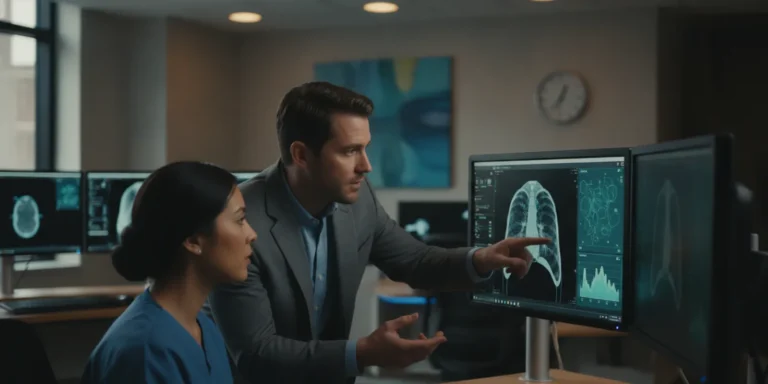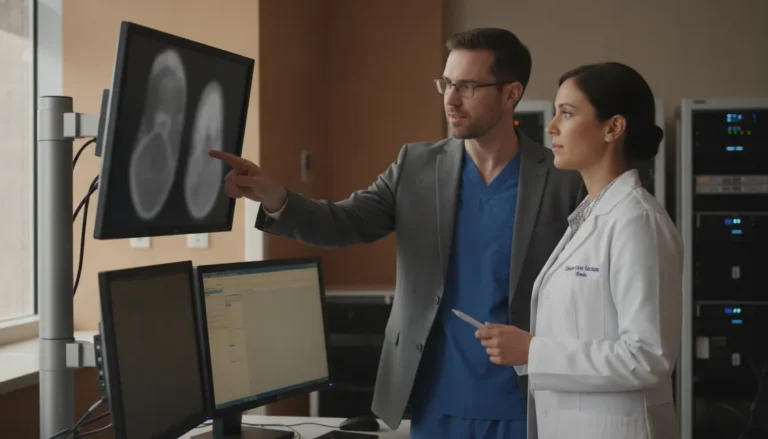
A telehealth visit in a hospital is more than a video call. It is a coordinated clinical workflow that gives a patient access to the right team, brings the relevant record and images into the conversation, and creates a clear path for follow-up. For hospital leaders, the central question is not whether video works. It is how access, communication, clinical context, security, and documentation fit together without asking clinicians to work around disconnected tools.
What a telehealth visit means in hospital care
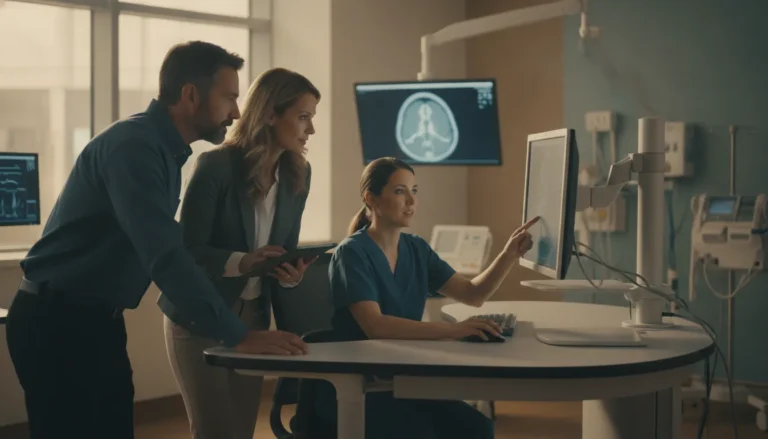
In an inpatient or hospital-based setting, a telehealth visit can connect a patient and bedside staff with a remote nurse, physician, specialist, interpreter, family member, or other approved participant. The visit may support virtual rounding, a consultation, an admission or discharge workflow, medication validation, tele-ICU communication, or specialist collaboration. The technology extends the care team’s reach, but it does not make a diagnosis, prescribe treatment, or replace the judgment of the responsible clinicians.
That distinction matters when a health system evaluates a platform. A consumer video tool may provide a meeting room, but a hospital workflow also needs identity and access controls, patient context, reliable audio and video, escalation paths, integration with the electronic medical record, and a record of what happened after the encounter. Imaging workflows may add another requirement: the ability to share a study or view a live modality with the appropriate specialist while the local team continues the procedure.
How patient access starts before the visit
A dependable visit begins with a defined access path. The patient, bedside nurse, remote clinician, and any additional participant should know who initiates the connection, how identity is confirmed, what device or room endpoint is used, and what happens if the connection fails. The exact process varies by use case, but the operational steps usually include:
- Identify the purpose. Classify the visit as rounding, consultation, telenursing, telesitting, admission, discharge, medication validation, family visitation, or another approved workflow.
- Confirm participants. Verify the patient, the responsible bedside team, the remote clinician, and any interpreter or support person who should join.
- Prepare the endpoint. Check the camera, microphone, speaker, display, lighting, privacy position, and network connection before the conversation begins.
- Set privacy expectations. Explain who can hear or see the encounter, confirm that the environment is appropriate, and follow the organization’s consent and documentation policy.
- Define escalation. Make clear who owns the next action if the patient needs an in-person assessment or the remote connection is interrupted.
For a multi-room program, access should be consistent without becoming rigid. A central team may monitor several rooms, while local nurses retain responsibility for bedside assessment and escalation. Clear roles reduce the risk that a technology alert or missed connection is mistaken for a clinical conclusion.
How the care team coordinates during the visit
The most useful hospital telehealth workflows treat the visit as a shared operating process rather than a standalone encounter. The bedside team supplies immediate physical context. The remote participant contributes availability, specialized knowledge, or observation from another location. The platform should make it easy to communicate, share relevant information, and hand off the next step.
A practical coordination model has four phases:
- Prepare: The initiating clinician confirms the purpose, participants, patient location, and information needed for the conversation.
- Connect: The team establishes two-way audio and video, confirms patient identity, and checks that all participants can communicate clearly.
- Collaborate: The remote and local teams discuss the patient, review available context, and document decisions through the health system’s approved process.
- Close the loop: The responsible team confirms the next action, owner, timing, and escalation route. The encounter is not complete until the handoff is understood.
This model supports both scheduled and event-driven care. A scheduled virtual round may follow a daily list. A telenursing or telesitting workflow may involve ongoing observation and two-way interaction. A specialist collaboration workflow may start when a local team needs input during a procedure. In every case, technology should make the intended workflow more visible, not create a parallel process that clinicians must reconcile later.
Where EMR context fits into a telehealth visit
Care teams need the right context at the point of communication. If clinicians must leave the EMR, search for a separate patient record, and manually reconstruct the encounter, the visit becomes slower and more vulnerable to omission. Integration should therefore be evaluated as part of the workflow, not as a checkbox on a vendor feature list.
Useful integration questions include:
- Can an authorized user launch the visit from the appropriate patient or encounter context?
- Can the system receive the patient, room, or visit details needed to reduce duplicate entry?
- Can approved notes, call records, results, or follow-up information return to the designated record?
- Does the workflow support the health system’s identity, role, audit, and retention requirements?
- Can the integration accommodate different departments, campuses, and emergency escalation paths?
Teleray supports integration with more than 250 EMR systems, including Epic, Cerner, MEDITECH, and athenahealth, according to the company’s platform documentation. Its virtual care workflows include options such as Epic Context Aware Linking and call logging for documentation. Health systems should still validate the exact integration scope, configuration, and governance requirements for their environment. See the EMR integration overview for more detail.
How secure image sharing extends the visit
Some hospital visits depend on more than conversation. A remote specialist may need to review a prior study, receive a DICOM image, or see a live ultrasound or other modality while a local technician works with the patient. This is where a unified virtual care and imaging workflow can reduce context switching.
Secure image sharing can support a visit in several ways:
- Prior context: The team can review relevant images or reports before discussing the next step.
- Live collaboration: A specialist can view a streamed modality, communicate with the local team, and discuss what is visible during the procedure.
- Post-exam continuity: DICOM files and related information can move into the approved storage, exchange, or diagnostic workflow after the exam.
- Shared understanding: The patient and local team can participate in a conversation that includes the same visual context as the remote specialist.
Teleray Live is designed for real-time modality streaming and remote collaboration, while Teleray’s imaging tools support DICOM exchange and diagnostic viewing. The appropriate use of each function depends on the modality, clinical workflow, device configuration, and the health system’s policies. A diagnostic viewer’s FDA 510(k) clearance applies to the cleared function and does not mean the platform replaces a qualified clinician or the organization’s clinical governance.
For teams evaluating this workflow, the secure image exchange and storage solution and the live imaging and radiology observation capabilities are useful starting points.
Security and compliance are workflow requirements
Security should be reviewed at each handoff in the visit. Leaders should ask how the platform authenticates users, limits access, protects video and images in transit, isolates customer data, records activity, and supports incident response. They should also confirm how the vendor’s controls fit the health system’s own HIPAA policies, business associate agreement, risk assessment, and retention requirements.
Teleray positions its platform for HIPAA-compliant healthcare workflows and documents SOC 2 Type II controls. Its architecture includes a proprietary peer-to-peer encryption layer described as exceeding AES-256, along with a breach insurance policy. These are vendor-level safeguards and assurances, not a substitute for a hospital’s security review. A responsible evaluation should examine the specific product configuration, user roles, integrations, devices, and data flows that will be used in production.
Privacy also affects the room itself. A camera should show what the care team needs and no more. Staff should know when a connection is active, how to mute or pause it, and how to protect conversations when visitors or other patients are nearby. The best technical design still depends on training and clear operating procedures.
What happens after the telehealth visit
Closing the video connection is not the end of the workflow. The responsible team should confirm what was discussed, what actions were assigned, and where the encounter information belongs. Post-visit documentation may include a call record, a clinical note, an imaging reference, a referral or escalation, a patient education step, or a follow-up appointment. The exact record depends on the encounter and the health system’s policy.
A strong closeout process answers five questions:
- What was the purpose of the visit?
- Which clinicians and staff participated?
- What information or images were reviewed?
- What action is required, and who owns it?
- Where is the approved documentation stored?
These questions create continuity for the next clinician and make it easier for operational leaders to review whether the workflow is being used as designed. They also help distinguish a completed communication event from a completed care process. Technology can support the first. The clinical team remains accountable for the second under its established policies.
How hospitals should evaluate a telehealth visit workflow
Before expanding a program, hospital administrators, nursing leaders, and IT teams can test a representative set of scenarios. Include a routine virtual round, a remote nursing interaction, a specialist consultation, an imaging collaboration, and a failed-connection or escalation case. Then evaluate the workflow from the perspectives of the patient, bedside staff, remote clinician, IT team, privacy office, and medical records team.
Key evaluation criteria include:
- Patient and provider access across the devices and locations the program will use.
- Audio, video, and room privacy controls that work in real clinical environments.
- EMR and identity integration that preserves context and reduces duplicate entry.
- Secure image sharing and, where appropriate, live modality collaboration.
- Clear role-based access, auditability, and administrative controls.
- Documentation, handoff, downtime, and escalation procedures.
- Training and support for both hospital staff and patients.
A platform that connects virtual care, medical imaging, and patient monitoring can help health systems design one coordinated operating model instead of adding another isolated video tool. The buying decision should be based on the workflows the organization must run, the controls it must prove, and the experience it can sustain after implementation.
Frequently Asked Questions
What is a telehealth visit in a hospital?
It is a virtual clinical interaction that connects a patient or bedside team with an authorized remote participant. Depending on the use case, it may support rounding, consultation, telenursing, telesitting, admission, discharge, or specialist collaboration.
Does a telehealth visit replace an in-person assessment?
No. A telehealth visit supports communication and access to care-team members, but it does not replace clinical judgment, an in-person assessment when needed, or the hospital’s escalation and treatment policies.
What should hospitals connect to the telehealth workflow?
At minimum, teams should evaluate patient identity and access, the EMR context, audio and video endpoints, documentation, escalation, and privacy controls. Imaging-focused programs may also need secure DICOM exchange, diagnostic viewing, or live modality streaming.
How does telehealth support care-team coordination?
It can connect local staff with remote nurses, physicians, and specialists, provide shared patient or imaging context, and make the next action and owner easier to document. The organization still defines who is responsible for clinical decisions and follow-up.
What should administrators ask a telehealth vendor?
Ask how the platform handles identity, roles, EMR integration, patient access, room privacy, secure data exchange, audit logs, downtime, support, documentation, and the workflows your teams actually need to run. Validate vendor claims against your own security, clinical, and compliance requirements.